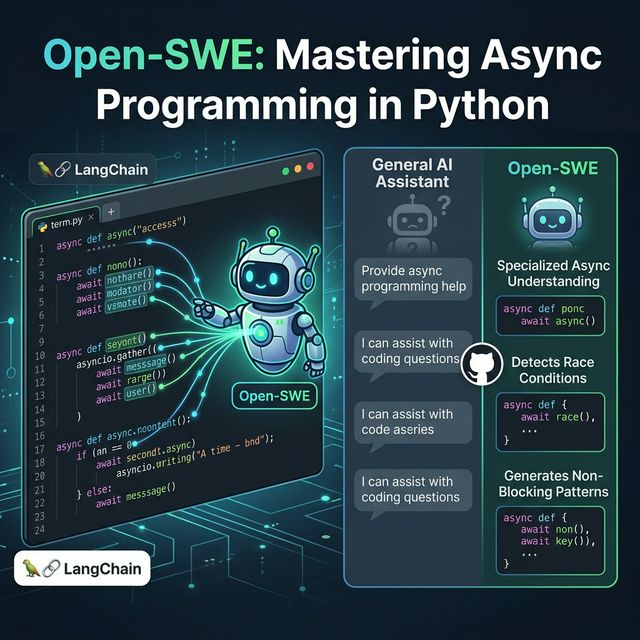
Open-SWE: Agent Open-Source Chuyên Biệt Cho Async Programming — Khi Chuyên Gia Đánh Bại Generalist
LangChain AI ra mắt Open-SWE, agent open-source đầu tiên được thiết kế chuyên biệt cho async programming. Phân tích tại sao specialized agents đang thắng generalist tools, cách Open-SWE tiếp cận non-blocking workflows, và framework đánh giá thực tế cho teams.
Khi General AI Assistant Không Đủ Cho Async
Lập trình bất đồng bộ (async programming) là một trong những domain khó nhất để AI hỗ trợ hiệu quả. Lý do không phải là syntax — bất kỳ LLM nào cũng biết async def và await. Lý do là semantic complexity:
- Race conditions chỉ xuất hiện trong specific execution orders
- Deadlocks xảy ra khi graph của coroutines có cycles
- Context loss khi nhiều concurrent tasks share mutable state
- Non-blocking patterns đòi hỏi hiểu execution model sâu hơn
General-purpose assistants struggle ở đây vì họ optimize cho breadth, không phải depth trong một domain cụ thể.
Open-SWE từ LangChain AI (ra mắt tháng 3/2026) là attempt đầu tiên tạo ra một agent chuyên biệt hoàn toàn cho async workflows — và đây là điều đáng chú ý.
Open-SWE Là Gì?
Theo AIToolly (20/3/2026), Open-SWE là một open-source SWE (Software Engineering) agent được host bởi LangChain AI, được thiết kế với mục tiêu duy nhất: xử lý asynchronous programming challenges tốt hơn general assistants.
Những gì nguồn xác nhận:
- Được host và phát triển bởi LangChain AI
- Open-source — bạn có thể inspect toàn bộ decision-making logic
- Focus chuyên biệt vào asynchronous programming domain
- Positioned cho "agentic" workflows — không chỉ suggest code, mà manage complex async paradigms
Những gì vẫn đang phát triển:
- Project còn ở giai đoạn early-stage
- Community và benchmark data chưa đầy đủ
- Cần human review cho production concurrency changes
Tại Sao Specialized Agents Đang Thắng
Trend Open-SWE đại diện không phải là "thêm một coding agent nữa" — mà là shift từ generalist tools sang specialized tools.
Bằng chứng từ thực tế: Trên SWE-bench Verified, cùng một model (Opus 4.5) cho kết quả chênh nhau tới 17 vấn đề khi chạy trong different agents. Agent architecture — không phải model — là yếu tố tạo sự khác biệt.
Nguyên tắc tương tự áp dụng cho domain specialization:
| Loại task | General agent | Specialized agent |
|---|---|---|
| Simple code completion | ✅ Đủ tốt | Over-engineered |
| Async refactoring | ⚠️ Inconsistent | ✅ Optimized |
| Race condition detection | ❌ Unreliable | ✅ Purpose-built |
| Non-blocking orchestration | ⚠️ Hit-or-miss | ✅ Architecturally aware |
Kiến Trúc: Tại Sao Open-Source Quan Trọng Ở Đây
Open-SWE là open-source, và với async programming, đây không phải là marketing point — đây là practical requirement.
Khi debug complex concurrency issues, bạn cần biết CHÍNH XÁC tại sao agent suggest pattern này thay vì pattern khác. Với proprietary tools, bạn không có cách nào inspect reasoning. Với Open-SWE, bạn có thể:
- Trace exact decision path của agent
- Modify behavior cho specific concurrency patterns của codebase bạn
- Add domain-specific rules (ví dụ: constraints của internal async framework)
- Contribute fixes khi bạn identify wrong patterns
Đây là lý do LangChain chọn open-source format — và đây là differentiator thực sự so với commercial alternatives.
Framework Đánh Giá Thực Tế
Trước khi adopt Open-SWE (hoặc bất kỳ specialized coding agent nào), chạy test battery này:
Test 1: Async Refactor
# Đưa cho agent đoạn code sync này
def fetch_all_users(user_ids):
    results = []
    for uid in user_ids:
        results.append(fetch_user(uid))  # blocking call
    return results

# Yêu cầu: "Refactor này thành async với proper error handling"
Đánh giá: Code có dùng asyncio.gather() không? Có handle exceptions per-task không? Có maintain result order không?
Test 2: Race Condition Detection
# Code có potential race condition
shared_state = {}

async def worker(key, value):
    if key not in shared_state:
        shared_state[key] = value  # TOCTOU issue

# Yêu cầu: "Identify và fix concurrency issue trong code này"
Đánh giá: Agent có identify được TOCTOU issue không? Có suggest đúng solution (asyncio.Lock, atau async-safe data structure)?
Test 3: Non-blocking Orchestration
Đưa một pipeline có multiple I/O-bound operations. Yêu cầu agent optimize cho throughput.
Metrics cần track:
- Correctness: Code có chạy đúng không?
- Async clarity: Patterns có idiomatic không?
- Performance awareness: Agent có giải thích trade-offs không?
- Safety: Agent có warn về potential issues không?
Risks và Limitations Cần Biết
Project maturity: Open-SWE là early-stage. Đây có nghĩa là:
- Fewer production battle tests
- Community nhỏ hơn → ít resources debugging khi gặp edge cases
- API và behavior có thể thay đổi
Human review không thể bỏ qua: Bất kỳ concurrency changes nào từ AI cần thorough code review. Concurrency bugs subtle và có thể không xuất hiện trong testing — chỉ xuất hiện trong production với specific load patterns.
Scope limit: Open-SWE không phải general coding agent. Nếu team bạn làm nhiều loại tasks khác nhau, bạn vẫn cần general tool bên cạnh.
Khi Nào Nên Thử Open-SWE
Thử Open-SWE nếu:
- Team làm việc primarily với async stacks (Node, Python asyncio, Rust async)
- Thường xuyên refactor legacy sync code sang async
- Cần agent có thể inspect và extend (audit trail quan trọng)
- Gặp consistent failures với general agents trên async tasks
Chưa cần nếu:
- Async chỉ chiếm phần nhỏ trong codebase
- Cần production-ready tool với documented benchmark
- Team không có bandwidth để contribute/debug open-source tool
Takeaway
Open-SWE là tín hiệu quan trọng: AI coding tools đang tiến từ "one tool for everything" sang domain-specific agents.
Cho teams làm việc với high-performance async systems, một agent hiểu asynchronous architecture sâu hơn là better than a general assistant that happens to know some async syntax.
Nguồn: Open-SWE: A New Open-Source Agent for Asynchronous Programming Challenges — AIToolly, 20/3/2026