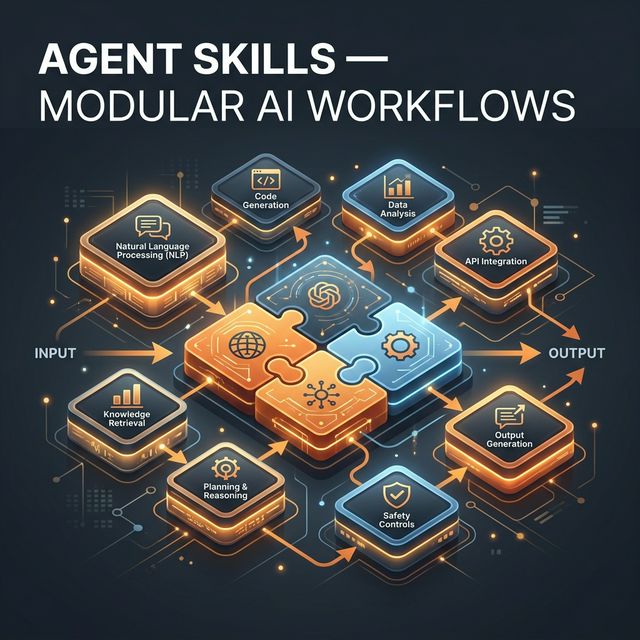
Agent Skills Giải Thích: Tại Sao Skill Modules Sẽ Trở Thành Tầng Chuẩn Cho AI Agent Workflows
Prompt đơn lẻ không scale được cho AI agent workflows lặp lại. Anthropic giới thiệu Agent Skills — các module đóng gói instructions, scripts, resources để agent load khi cần. Bài viết phân tích skill là gì, so sánh với Prompt/Tool/MCP, use cases thực tế, và cách xây dựng skill library cho team.
Vấn Đề: Prompt Đơn Lẻ Không Scale Được
Hầu hết AI agent workflows hiện tại hoạt động theo kiểu: nhồi tất cả instructions vào một prompt dài → hy vọng agent hiểu và làm đúng.
Cách này gặp vấn đề rõ ràng:
- Prompt quá dài → tốn tokens, giảm chất lượng output
- Không tái sử dụng được → mỗi task phải viết lại instructions
- Không version control được → kiến thức nội bộ nằm trong đầu người dùng
- Không chia sẻ được → team member khác không biết prompt bạn dùng
Agent Skills của Anthropic là câu trả lời cho vấn đề này.
Agent Skills Là Gì?
Theo blog chính thức của Anthropic:
Một Skill là một thư mục chứa sẵn:
- Instructions (SKILL.md) — hướng dẫn chi tiết cho agent
- Scripts — code thực thi hỗ trợ (Python, Bash...)
- Resources — templates, examples, validation rules
- Optional logic — logic chạy tự động khi skill được load
Agent chỉ load skill khi relevant — không nhồi tất cả vào context. Điều này giải quyết vấn đề prompt bloating.
Nói đơn giản:
Skill = đóng gói domain expertise thành một module tái sử dụng, có version, có audit.
Tại Sao Skills Quan Trọng Cho Agent Thực Tế
1. Giảm Prompt Bloat
Thay vì 5000-token system prompt, agent chỉ load skill cần thiết cho task hiện tại. 500 tokens cho cleanup rules? Load khi cần refactor. 800 tokens cho SEO rules? Load khi viết content.
2. Tăng Consistency
Skill đóng gói chính xác cách agent nên xử lý một loại task. Mọi team member dùng cùng skill → output nhất quán.
3. Capture Institutional Knowledge
Best practices của team không còn nằm trong đầu senior engineer. Chúng được code hóa thành skill files có version control.
4. Chia sẻ và Version
Skills được lưu dưới dạng file → git versioning → PR review → shared across team.
5. Executable Logic
Không chỉ là text hướng dẫn — skills có thể chứa scripts chạy được (lint, test, validate) → agent thực sự làm việc, không chỉ nói cách làm.
So Sánh: Prompt vs Tool vs MCP vs Skill
| Abstraction | Vai trò | Ví dụ |
|---|---|---|
| Prompt | Định khung task, đặt context | "Viết API endpoint theo REST conventions" |
| Tool | Thực thi action cụ thể | grep_search, run_command, edit_file |
| MCP | Kết nối hệ thống bên ngoài | MCP server cho CRM, Notion, GitHub |
| Skill | Đóng gói know-how tái sử dụng | Folder chứa coding standards + lint scripts + templates |
Tất cả 4 layers đều cần thiết trong agent systems trưởng thành:
- Prompt khởi tạo task
- Skill cung cấp domain expertise
- Tool thực thi
- MCP kết nối external data
Skill bổ sung cho MCP, không thay thế. MCP = kết nối data. Skill = đóng gói cách xử lý data.
Use Cases Tốt Nhất Cho Skills
Coding Teams
- Coding conventions: Skill chứa rules về naming, structure, error handling → Claude Code apply tự động
- Test patterns: Skill chứa unit test templates, AAA pattern, coverage requirements
- PR review checklist: Skill chứa code review criteria + validation scripts
Content & Marketing Teams
- Brand voice: Skill đóng gói tone, terminology, do/don't → mọi content output nhất quán
- SEO writing: Skill chứa keyword research templates, meta tag patterns, heading structure rules
- Social media: Skill format bài post theo platform-specific rules
Operations & Internal Tools
- SOP execution: Standard Operating Procedures thành executable skills
- Onboarding: Skill hướng dẫn agent tạo tài liệu onboarding từ company wiki
- Reporting: Skill template cho weekly/monthly reports từ data sources
Cách Xây Dựng Internal Skill Library
Bước 1: Identify — Tìm Workflow Lặp Lại
Hỏi team: "Task nào chúng ta làm dưới 3 lần/tuần mà mỗi lần phải giải thích lại cách làm?"
Bước 2: Package — Đóng Gói Thành Skill
skills/
├── code-review/
│   ├── SKILL.md          # Instructions chi tiết
│   ├── scripts/
│   │   └── lint_check.py # Auto-lint trước review
│   └── examples/
│       └── good_pr.md    # Ví dụ PR tốt
├── seo-writing/
│   ├── SKILL.md
│   └── resources/
│       └── keyword_template.md
Bước 3: Scope — Giữ Skill "Hẹp"
❌ Skill quá rộng: "Everything about code quality"
✅ Skill đúng scope: "Python unit test patterns for FastAPI services"
Bước 4: Version — Quản Lý Như Code
- Commit skill files vào git
- PR review khi thay đổi skill
- Tag version khi skill stable
Bước 5: Audit — Trust & Safety
Skills có thể chạy scripts → cần review security:
- Scripts có side effects gì?
- Có access filesystem không cần thiết không?
- Có gọi external APIs không mong muốn không?
Rủi Ro Cần Lưu Ý
| Rủi ro | Giải pháp |
|---|---|
| Skill scope quá rộng → unreliable | Giữ mỗi skill một responsibility rõ ràng |
| Third-party skills có thể chứa malicious code | Review source trước khi import |
| Skill sprawl (quá nhiều skills không quản lý được) | Governance: ownership + audit cycle |
| Skills bị "over-fit" cho một team cụ thể | Design for reusability across similar teams |
| Không có observability | Log khi nào skill được load, kết quả ra sao |
Tại Sao Điều Này Quan Trọng Hơn Là Chỉ Về Anthropic
Cross-platform portability mới là câu chuyện lớn hơn. Teams muốn reusable agent capabilities sống sót qua model/vendor shifts. Nếu bạn build skills cho Claude Code hôm nay, concept này transferable sang bất kỳ agent framework nào khác:
- Skill = folder instructions + scripts + resources
- Không phụ thuộc vào vendor API cụ thể
- Pattern này đang trở thành industry standard cho modular agent design
Kết Luận
Bước cải tiến tiếp theo của agent quality có thể không đến từ model lớn hơn hay prompt dài hơn — mà từ workflow packaging tốt hơn. Agent Skills là candidate mạnh nhất cho packaging layer đó.
Thử ngay: Audit một repetitive workflow trong stack của bạn tuần này. Redesign nó thành một reusable skill với instructions, examples, và validation steps.