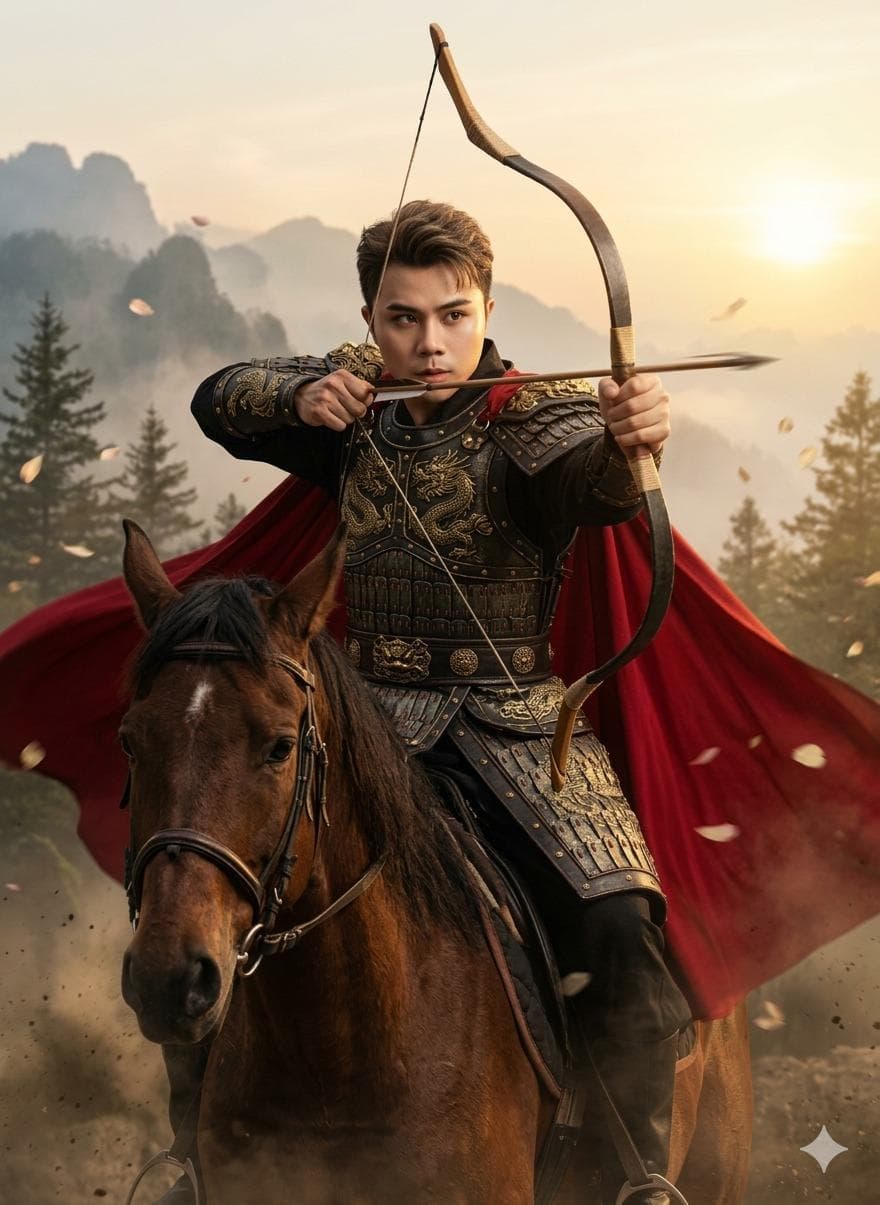
AI Cinematic Portrait Prompt: Wuxia Wedding Bow Rider with Face Reference
A detailed AI image prompt guide for generating a cinematic Wuxia wedding scene — a character riding a horse and shooting a bow — with 100% face identity preserved from a reference photo.
How do you create an AI image that places your real face into a sweeping cinematic epic — riding a horse, firing an arrow, in ancient Wuxia style, bathed in golden sunset light — while preserving 100% facial identity?
The prompt below constructs a complete cinematic scene: from gender-adaptive costume design, to real ARRI Alexa 65 camera specifications, misty ancient mountain environments, and selective motion blur on silk fabric streaming in the wind.
📸 Result Image
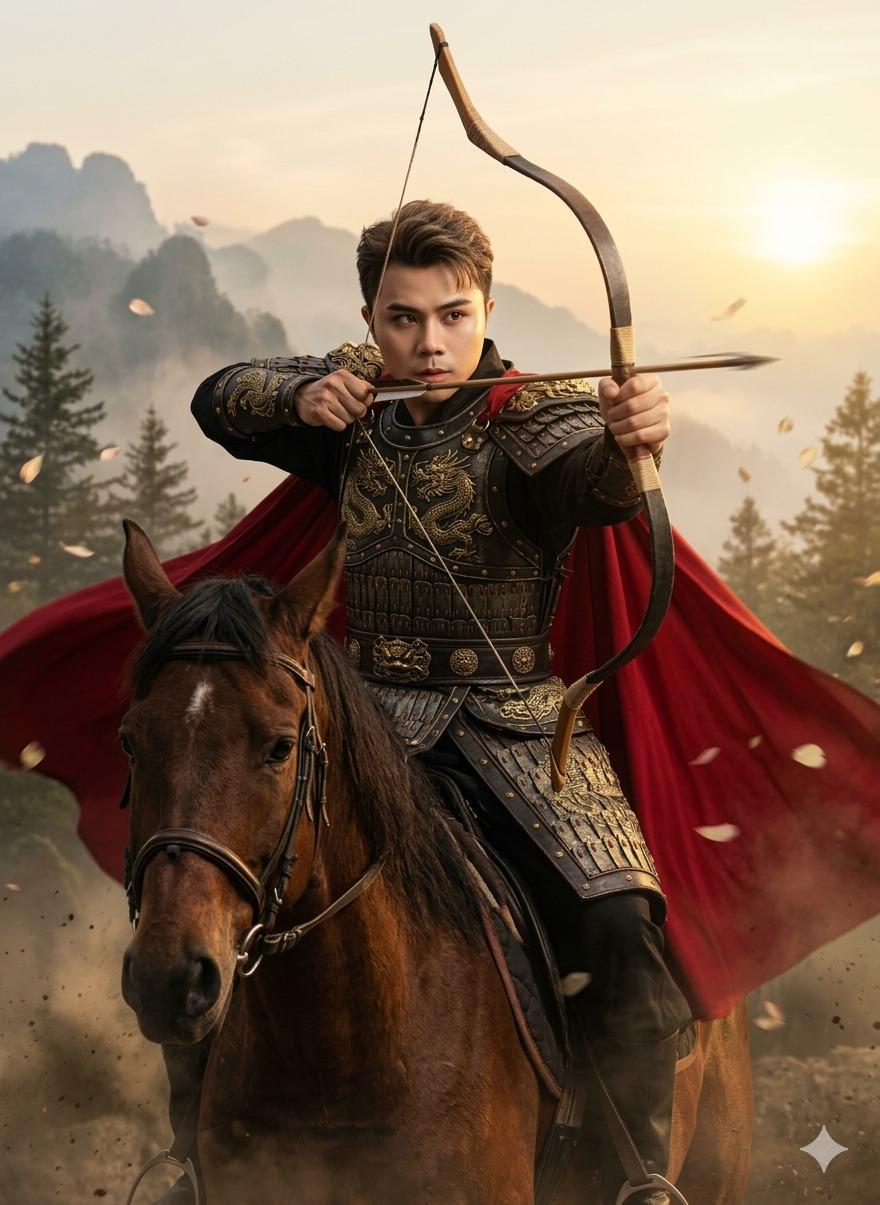
AI-generated image — face identity preserved 100% from reference photo.
✍️ The Full Prompt
Compatible with AI Image models supporting Face Reference (Flux Dev, Midjourney --cref, or equivalent):
Use my uploaded photo as face reference. Preserve the exact facial identity and recognizable facial features from the reference image. The face must remain natural, realistic, and seamlessly integrated with the body (not pasted or distorted). Hair style and expression can adapt slightly to the wind and lighting but must still resemble the real person.

Scene description:
A cinematic wuxia martial arts wedding scene. The character is riding a strong horse while pulling a traditional Chinese longbow and shooting an arrow forward. The moment captures the instant the arrow leaves the bowstring.

Gender adaptive costume:
- If the face is female: a luxurious silk princess-style hanfu wedding dress, long flowing sleeves, embroidered phoenix patterns, elegant layered silk fabric flying in the wind, delicate jade hairpins and traditional Chinese wedding ornaments.
- If the face is male: heroic ancient warrior armor, ornate lamellar armor with dragon engravings, red ceremonial cape flowing behind, martial hero styling.

Camera composition:
medium shot framing (waist-up to horse neck visible), the rider clearly visible on the horse, face prominent and detailed, horse head and upper body included in frame, dynamic action pose while shooting the arrow.

Camera & Lens:
cinematic photography
shot on ARRI Alexa 65
85mm portrait lens
f/2 aperture
shallow depth of field
subject sharply in focus
background slightly blurred

Lighting:
golden sunset lighting
cinematic rim light on hair and costume
volumetric light beams
soft cinematic shadows
dramatic atmosphere

Environment:
ancient wuxia mountains, mist drifting through pine forests, petals and dust floating in the air, epic fantasy martial arts movie setting.

Motion details:
horse slightly rearing or galloping, silk clothing or cape flowing dramatically, bow fully drawn, arrow flying forward with slight motion blur.

Rendering quality:
ultra photorealistic
8k resolution
cinematic movie still
masterpiece
extreme detail
high dynamic range
sharp focus on face
perfect anatomy
natural skin texture
🔍 Prompt Structure Breakdown
1. Face Reference — Seamless Identity Integration
"Preserve the exact facial identity... not pasted or distorted... must still resemble the real person."
This is the hardest challenge when using face references in AI image generation: AI tends to produce a "face paste" effect — where the face looks artificially glued onto a different body. This opening declaration sets a clear standard — the face must integrate naturally, not be composited.
2. Gender-Adaptive Costume
"If female: luxurious silk hanfu wedding dress... If male: heroic ancient warrior armor..."
This is an elegant technique that makes the prompt work with any reference photo. The AI automatically selects the appropriate costume based on the gender identified from the face. No need to write two separate prompts.
3. Real Camera Specifications
"ARRI Alexa 65, 85mm portrait lens, f/2 aperture, shallow depth of field..."
Using actual cinematic equipment names (ARRI Alexa 65 — the gold-standard Hollywood cinema camera) and precise technical specifications (f/2, 85mm) rather than just saying "cinematic" guides the AI to create a very specific aesthetic: shallow bokeh background, razor-sharp face, characteristic film-stock rim lighting.
4. Three-Layer Cinematic Lighting
"Golden sunset lighting + cinematic rim light on hair and costume + volumetric light beams"
Describing lighting across three distinct sources:
- Ambient: golden sunset (warm full-scene glow)
- Rim light: edge light outlining hair and costume (defines volume and shape)
- Volumetric: light shafts through mountain mist (adds dramatic atmospheric depth)
These three layers combine to produce signature cinematic film-stock lighting.
5. Selective Motion Blur
"Arrow flying forward with slight motion blur... silk clothing flowing dramatically."
Blurring only moving elements (arrow, flowing fabric, horse movement) while keeping the face sharp. This mirrors real professional photography technique — selective blur amplifies the sense of action while preserving the clarity of the primary subject.
🎨 Application Tips
This Wuxia prompt is a highly flexible cinematic framework. Swap the scenery from "wuxia mountains" to:
- Samurai Edo Japan → kimono/lamellar armor + cherry blossom storm
- Persian Empire → golden desert + flowing silk robe + scimitar
- Viking Fjord → norse ring mail + fur cape + northern lights
Keep all camera setup, lighting layers, and face reference protocol intact — simply swap scene + costume — and you'll build a cohesive multi-cultural cinematic portrait series with a unified visual signature.