Virtual Try-On: The Ultimate Prompt for AI Clothing Replacement
Dress any virtual or human model with absolute precision and realism. A complete teardown of the ultimate Virtual Try-On prompt strategy.
If in the previous article we learned how to "extract" clothing from a model into a white-background, today we are tackling the exact opposite and much harder task: Dressing a completely new model in those extracted (or flat-lay) garments! This game-changing technique is known as Virtual Try-On.
The most agonizing challenge for Generative AI in this process is retaining the model's exact face, their unique body proportions, and preventing the AI from creatively altering the new outfit. The extensive prompt below serves as an ultra-strict technical specification built to conquer all the usual "bad habits" of Generative AI.
Let's see how powerful this prompt engineering really is!
Real-World Experience (The Try-On Magic)
Below is the transformation achieved by using this Prompt (acting as the "Director") combined with an AI model specialized in ControlNet integrations:
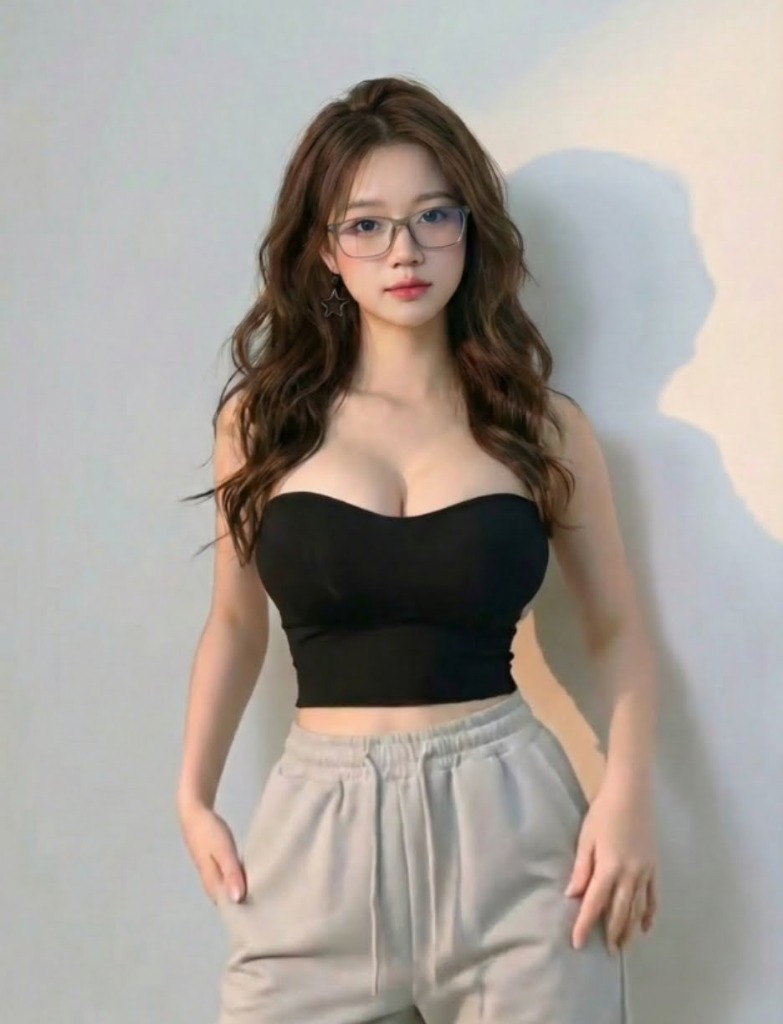
Reference #2 (The Model)
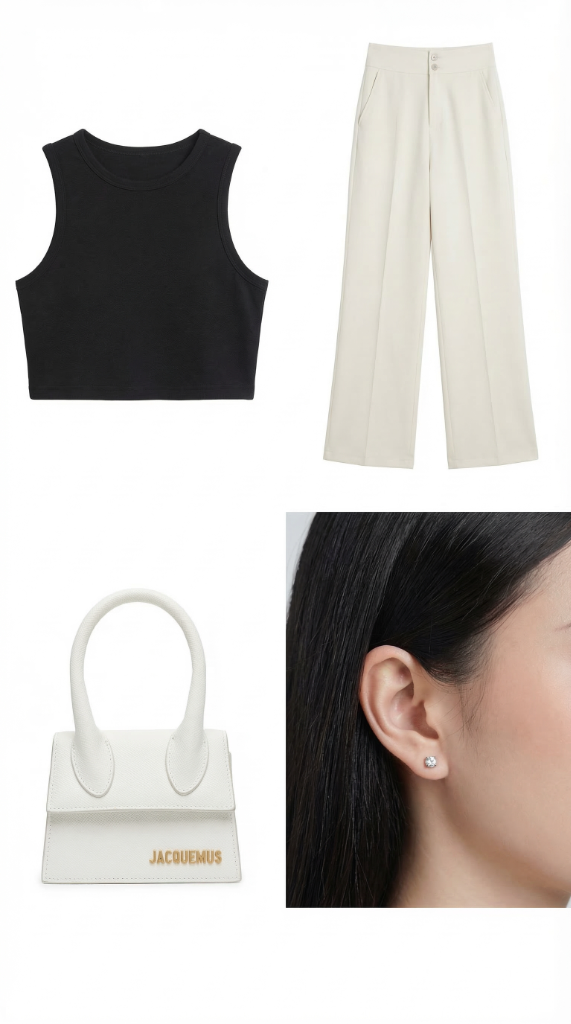
Reference #1 (Clothing Source)
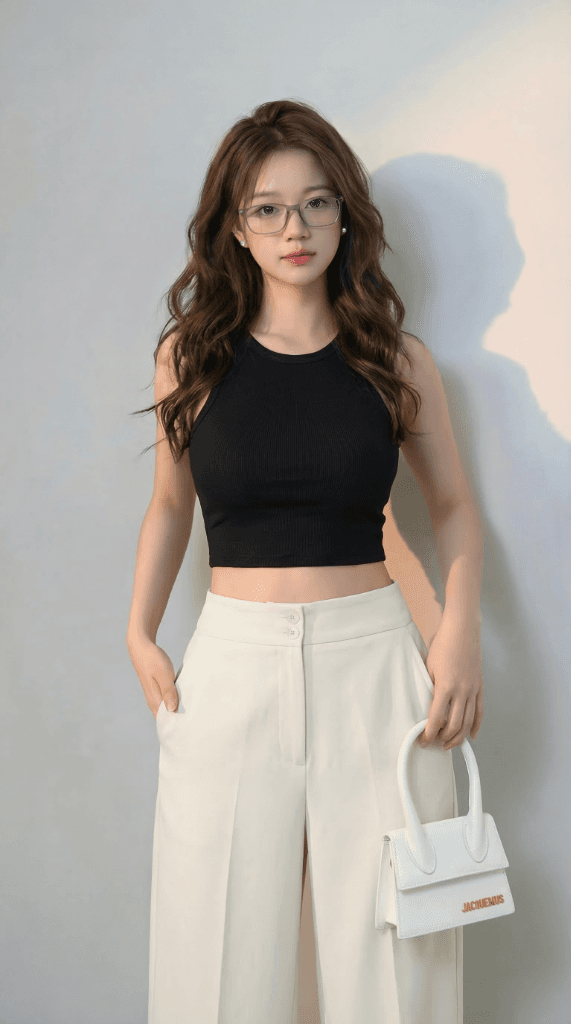
Final Result (Try-On Output)
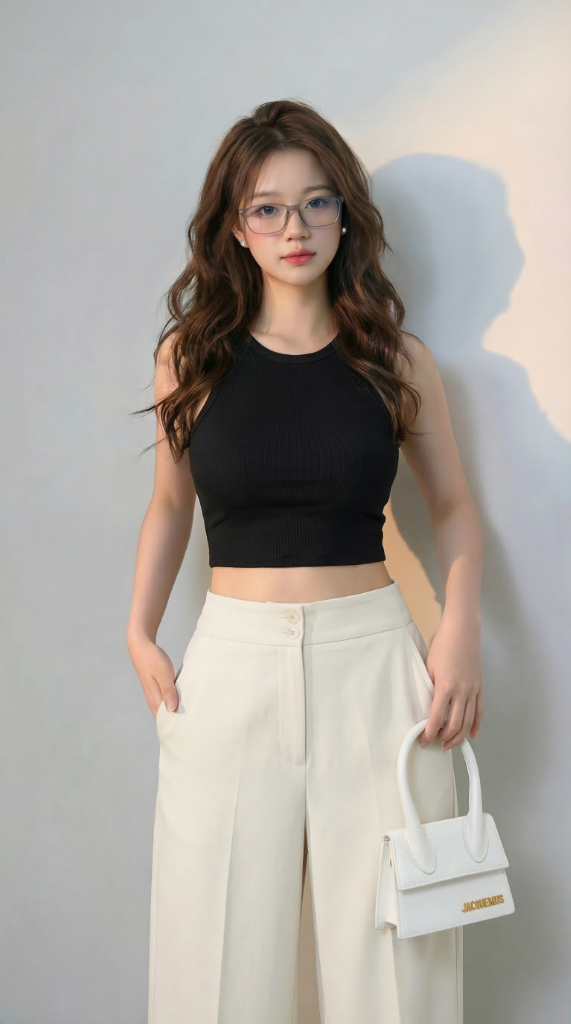
It is incredibly difficult to believe that the Jacquemus handbag, the black crop-top, the tailored white trousers, and the earrings were all mapped perfectly onto the model's existing body form—while keeping her facial expression, specific pose, and the original room lighting entirely intact.
The Complete Prompt (Copy and Use Immediately)
Use reference image #1 as the clothing and accessories source, and reference image #2 as the subject identity and body reference.

Goal:
Replace the outfit and accessories worn by the person in reference image #2 with the clothing and accessories visible in reference image #1, while preserving the identity, facial structure, body shape, proportions, pose, camera angle, framing, lighting direction, and overall photographic realism of reference image #2.

Subject preservation:
- Keep the face of the person from reference image #2.
- Preserve facial structure, eyes, nose, lips, jawline, skin tone, hairstyle (unless covered by clothing/accessories from image #1), body shape, posture, and natural proportions from reference image #2.
- Maintain the same person, not a redesigned or altered version.
- Do not beautify, stylize, or change age appearance.
- Do not modify body size, breast size, waist, hips, limb length, or overall physique.

Clothing transfer:
- Replace only the clothing and accessories on the person in reference image #2 with those from reference image #1.
- Accurately transfer every visible clothing item and accessory from reference image #1, including color, fabric, texture, stitching, seams, folds, logos, hardware, thickness, layering, fit, and garment construction.
- Preserve how the outfit naturally fits on the body of the subject in reference image #2.
- Do not redesign, reinterpret, simplify, or restyle the outfit.
- Do not invent extra fashion elements that are not visible in reference image #1.

Accessories:
- Transfer all visible accessories from reference image #1 exactly and individually.
- Preserve correct placement, scale, orientation, and material appearance.
- Do not merge separate accessories into one object.
- Do not omit small visible accessories.

Image composition:
- Keep the original composition of reference image #2.
- Preserve the pose, hand placement, body angle, head direction, facial expression, cropping, lens perspective, and framing from reference image #2.
- Keep the original background and environment of reference image #2 unchanged unless the clothing naturally occludes small areas.
- Do not alter the scene layout.

Realism and rendering:
- Photorealistic.
- Extremely realistic clothing transfer.
- True-to-life fabric behavior on the body.
- Accurate wrinkles, folds, tension, drape, and garment weight.
- Realistic material response such as cotton, denim, leather, silk, knit, metal, or plastic depending on the original item.
- Natural skin texture and realistic photographic detail.
- No CGI look.
- No illustration look.
- No artificial smoothing.
- No over-sharpened synthetic texture.

Occlusion rules:
- If part of the clothing in reference image #1 is hidden, infer only the minimum necessary construction required to complete the garment naturally on the subject in reference image #2.
- Any inferred parts must remain fully consistent with visible evidence from reference image #1.
- Do not hallucinate extra patterns, decorations, pockets, zippers, trims, or structural changes.

Strict rules:
- Keep the person from reference image #2.
- Use the clothing and accessories from reference image #1.
- Do not change the identity of the person.
- Do not change the body shape.
- Do not change the background.
- Do not add extra accessories.
- Do not remove existing transferred items from image #1.
- Do not stylize.
- Do not create a fashion illustration.
- Do not make it look like 3D render or CGI.

Negative prompt:
wrong outfit, wrong accessories, changed face, altered body shape, different person, distorted hands, warped fabric, incorrect clothing fit, wrong color, missing accessories, merged accessories, fake folds, plastic skin, over-smoothing, CGI, illustration, cartoon, rendering artifacts, inconsistent lighting, incorrect proportions, background changes, stylized fashion edit
Dissecting the "Anatomy" of this Try-On Masterpiece
Having the AI randomly slap clothing onto a person isn't hard; what's brutally difficult is preserving the true identity of both the wearer and the original garment. This prompt solves it through a multi-layered locking structure.
1. Zeroing in on the Source Logic (Goal Statement)
It immediately establishes the roles: Who is the "mannequin" (Reference #2), and what are the visual "assets" being applied (Reference #1). There is no room for confusion.
- "Replace the outfit and accessories... while preserving the identity... proportion, pose, camera angle..."
2. Hard-Locking the Model's DNA (Subject Preservation)
An unshakeable rule in catalog fashion photography is that the model's form and identity must remain absolute.
- "Do not modify body size, breast size, waist, hips, limb length, or overall physique." This is a massively important command. It fundamentally prevents the AI's standard inclination to randomly "slim down waists" or "beautify" facial structures every time it generates a new frame. Thanks to this lock, absolute originality of the model's photography is preserved.
3. Occlusion Logic & Garment Architecture (Clothing transfer)
A flatlay photo presents a garment entirely differently than when it drapes across human curves.
- "Preserve how the outfit naturally fits on the body of the subject" - It must be custom-tailored to the subject's exact form.
- "Infer only the minimum necessary construction required..." - If part of the garment is hidden in the flatlay, rebuild it minimally. DO NOT hallucinate random weird patterns or extra pockets.
- "Accurate wrinkles, folds, tension, drape, and garment weight." - The AI is forced to understand gravity, fabric drop, and tension. This makes the Try-On look like a genuine photograph, rather than a cheap, flat Photoshop cut-and-paste job.
4. Accessory Segregation (Accessories Integration)
A classic failure point of AI is fusing a belt loop directly into a handbag strap, or turning earrings into weird hair clips. The command "Transfer all visible accessories... exactly and individually. Do not merge separate accessories" cracks this complexity. It demands a divide-and-conquer approach to rendering completely isolated objects. The bag must hang in the hand; the earring must pin to the earlobe.
5. Imprisoning the Environment (Image Composition & Rendering)
- "Keep the original background and environment of reference image #2 unchanged"
- It explicitly forbids any slippery 3D CGI or plasticky skin artifacts. It demands natural human skin textures and the precise studio/room lighting of the original source photo.
Essentially, this prompt operates as an ironclad "legal contract" sent to the graphic model, barricading every avenue for unwanted improvisation. The author deeply understands the "hallucinating" nature of Generative AI and built an inescapable cage to force it to produce a high-value realistic output—the literal holy grail of AI in modern Fashion Retail!