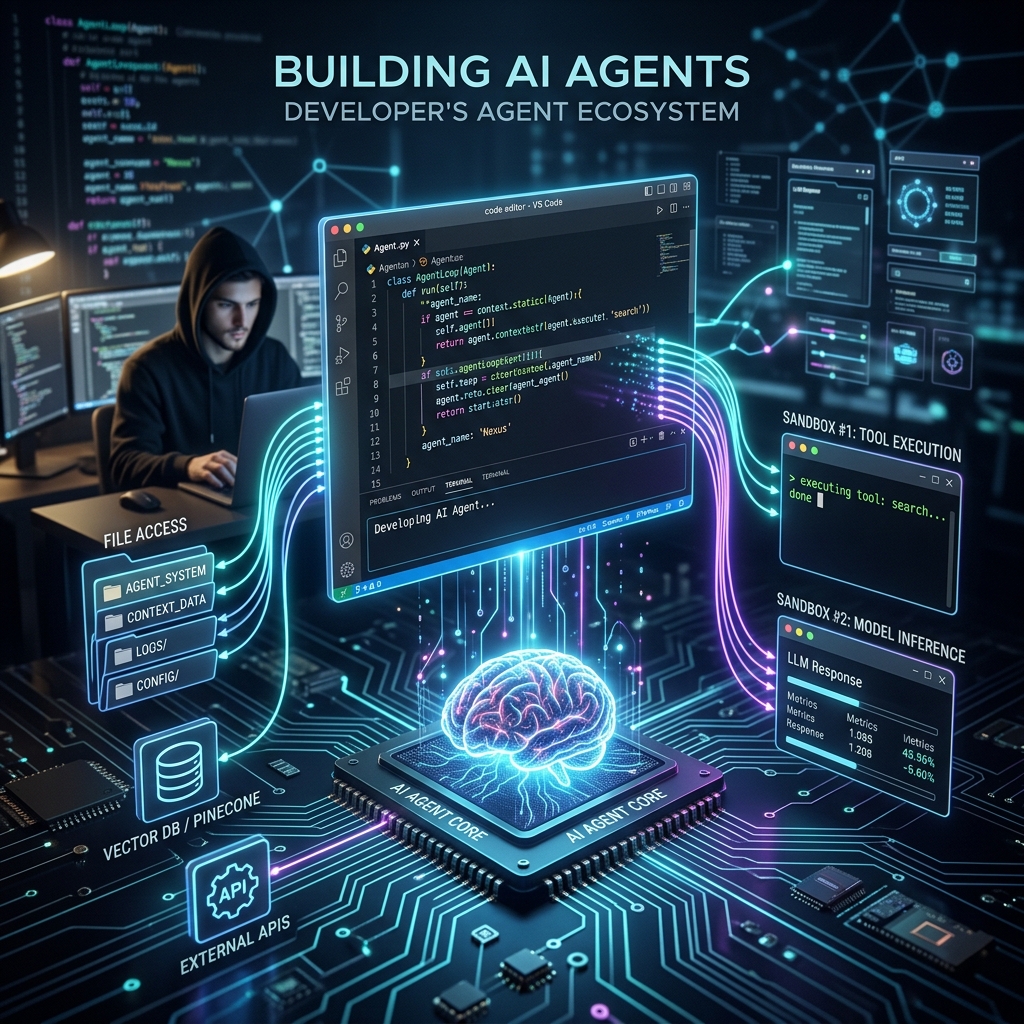
OpenAI Agents SDK Gets a Massive Upgrade: Native Sandbox & Model-Native Harness
The April 2026 update turns the Agents SDK from an interesting framework into a real production architecture story addressing workspace, sandbox execution, and deep tooling.
OpenAI’s April 2026 update turns the Agents SDK from “interesting framework news” into a real production architecture story. This release introduces a model-native harness, native sandbox execution, configurable memory, and manifest-based workspace control, pushing the boundaries of what developers can achieve.
For system builders, this answers a massive real-world question: What does a modern, production-ready agent stack need beyond just the raw API of the underlying model?
What OpenAI Added in This Update
Instead of piecing together fragments of infrastructure, developers now have standard building blocks:
- Model-Native Harness: An orchestration layer optimized natively for file usage, computer-style interactions, and tools.
- Native Sandbox Execution: Support for deeply controlled execution environments to run shell commands safely.
- Configurable Memory: Rigid controls for bounding an agent's memory stack over long sessions.
- Filesystem Tools: Patch/edit tools enabling agents to precision-edit lines of code without rewriting entire documents.
- MCP & Skills Integration: Seamless Model Context Protocol configuration combining logic loops with universal tool access.
- Durable Executions Concepts: Manifest abstractions defining strict workspace portability.
Why Agent Teams Desperately Needed This
Prototype agents almost always break at the runtime orchestration layer, rarely at the LLM level. Common friction points include:
- Unsafe or unpredictable code execution affecting host computers.
- Ad hoc file handling ending in context window overflow.
- Brittle orchestration trying to string multiple disjointed API actions manually.
- Memory modules that feel bolted on as an afterthought.
OpenAI recognized the gap. The architectural philosophy behind this update separates the harness orchestration from the brute compute environment, ensuring that critical secure credentials remain absolutely detached from the model-generated sandbox code.
Sandbox Execution Changes the Whole Conversation
Before this era, developers stitched together Docker instances, ephemeral VMs, or hosted sandboxes with duct tape. Now, the SDK natively integrates and wraps standardized ecosystem environments.
OpenAI has embraced partnerships supporting infrastructure from Cloudflare, E2B, Modal, Runloop, Vercel, Daytona, and native Bring-Your-Own-Sandbox methodologies.
This enables intense capabilities like fully isolated pipeline verification, isolated document processing, and agents executing Python or Bash directly inside an execution void.
Why MCP + Skills + AGENTS.md Matter Together
These three primitives combined create a hyper-structured agent operating model:
- MCP: Exposes tool interoperability. Interfacing your database is now plug-and-play.
- Skills: Supports workflows grouped as explicit behaviors available to the Agent.
- AGENTS.md: Serves as the ultimate instruction ledger, establishing specific rules on how the repository expects the Agent to behave inside the environment.
What Builders Should Do Next
If you possess a custom agent orchestration stack, perform a technical audit. Calculate the technical debt behind the runtime pieces your team currently maintains manually.
If you are prototyping, consider standardizing around the new Agent SDK as a reference architecture. Start with one single, highly repetitive file-based workflow, enforce clear memory boundaries, and configure the Sandbox manifest.
Production agent quality increasingly depends on runtime design rather than solely on model quality.
Note: Initially, the native environment favors Python, with the highly anticipated TypeScript architecture support expected later down OpenAI’s immediate roadmap.