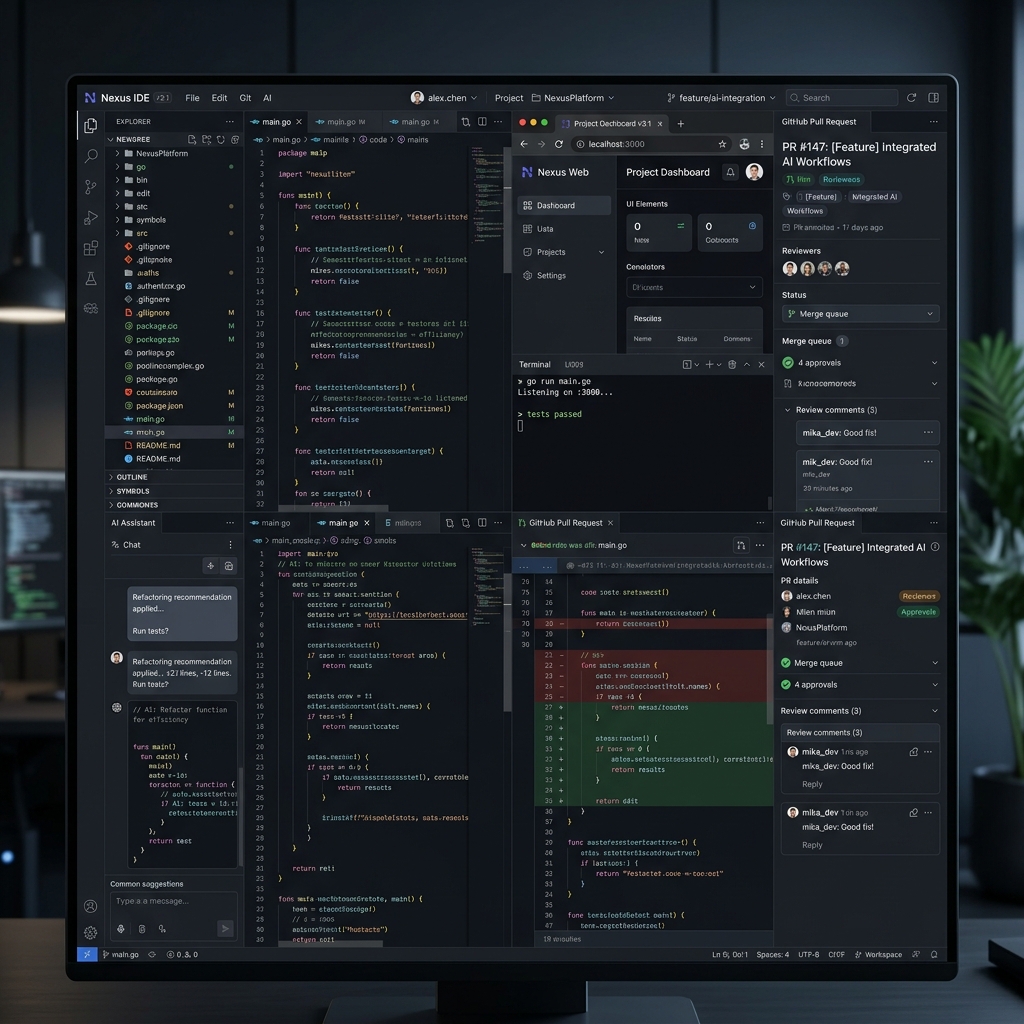
The Codex Evolution: Expanding Into an Orchestrated AI Workspace
The April 16 Codex update aggressively redefines AI coding products from raw code-generation chat tools into persistent workspaces handling browser sessions, computer ops, and PRs.
The sudden Codex update launched on April 16, 2026, broadcasts a resounding signal across the engineering ecosystem: the "AI coding assistant" mental model is officially outdated. Toolchains are aggressively evolving into persistent architectural workspaces rather than simple prompt-in/code-out utilities.
OpenAI systematically infused Codex with an in-app browser engine, full structural "Computer Use" capabilities specific to macOS, projectless chats geared toward research, heavily orchestrated thread automations, rich Pull Request (PR) review integrations, and global memory controls.
The Biggest Technical Advances Explained
Looking past the feature dump, here is exactly what the new interface delivers:
- In-App Browser Integration: Bypasses manual context switching by enabling local or public web traversal inside Codex, allowing an Agent to directly read rendered UI or documentation.
- macOS Computer Use: Direct execution and control logic across local macOS applications.
- Projectless Chats: Open a planning thread instantly to investigate architectures via AI before anchoring into a highly restrictive
.gitrepository. - Thread Automations: The ability to execute scheduled wake-up routines and follow-up loops heavily beneficial for monitoring asynchronous log states.
- Native PR Reviews: Inherent connection to GitHub logic—the AI reviews code, submits feedback locally, and continues to monitor feedback loops directly inside the workspace UI.
- Artifact Viewer: It recognizes that enterprise code requires context. Pdfs, spreadsheets, standard docs, and presentations are rendered and parsed instantly within the coding sequence.
What Massive Workflows This Unlocks
Real software development operates in fragmented domains: IDE terminal, Slack chats, GitHub PR tabs, and Google Docs requirements. The friction occurs when engineers manually carry conversational context across all boundaries. Codex mathematically targets this failure point.
- Research → Implementation → Validation Loop: A persistent thread now researches a dependency in the browser, implements the code within the IDE terminal, runs the build, opens the rendered page via the exact same thread, and checks the Console output to validate functionality.
- UI Bug Hacking: Developers command Codex to visually render the bug using real UI layouts to parse specific DOM logic rather than guessing structural faults from static
JSXtree representations alone. - Asymmetric PR Loops: A reviewer notes an inefficiency on a PR. The AI within your exact local Codex environment intercepts the note, rectifies the repository, explains the code alterations inside the thread, and stages the re-commit simultaneously.
The Practical Comparison Angle
When engineering teams debate AI utility today, they must observe three distinct operational models:
- Autocomplete Tools (The Copilot era): Fast snippets. Zero system awareness.
- Chat-based Assistants: High contextual coding logic natively confined inside IDE chatboxes. Hard manual steering.
- Persistent Coding Workspaces (Codex v2026): Active ecosystem traversing terminals, web nodes, document artifacts, and scheduled review loops utilizing heavy retained memory.
While extremely potent, integrating full "Computer Use" and sweeping browser navigation introduces variables. Independent Hackers and Startups are embracing the chaotic omnipotence, while traditional enterprise sectors might deploy immense skepticism around governance, security permissions, and unguided workflow loops.
Immediate CTA for Builders: Audit your engineering lifecycle. Track exactly where your codebase context leaks between Slack chats, PR review panes, terminal builds, and documentation. That friction zone is specifically where transitioning your team to an AI Workspace architecture will generate explosive ROI.